Where the herd holds its ground
Wildlife | December 2025
At first, it is not a single form that comes into focus, but a density — a gathering of movement and stillness layered together, where bodies overlap and merge into one another, making it difficult to distinguish where one ends and another begins. Dust hangs low across the ground, disturbed by the slow shift of hooves, and within it the herd settles, not restless, but never entirely at ease.
To stand within proximity of buffalo is to become aware of their collective presence before anything else. There is a weight to the group that does not come from size alone, but from number, from the quiet accumulation of individuals forming something larger and more unified. Heads remain low as they graze, horns curving outward and back in heavy arcs, their forms repeated again and again across the herd, creating a rhythm of shape that feels both ordered and irregular.
Movement within this structure is rarely abrupt. It begins almost imperceptibly, a subtle shift that passes through the group until it gathers into a shared direction. One animal lifts its head, then another, and slowly the herd adjusts, turning as though guided by something unspoken. There is no clear signal, no obvious leader in the moment, yet the response is immediate and cohesive, suggesting an awareness that is held collectively rather than individually.
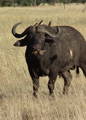
This awareness is constant, even in stillness. Ears turn, bodies angle slightly, space is maintained and adjusted in quiet increments. Calves remain close, positioned within the centre of the herd, while older bulls move along its edges or remain separate, their presence defined by distance rather than integration. The structure shifts subtly over time, but never loses its cohesion, held together by a balance that is both fluid and deeply established.
As the herd moves, the ground responds beneath it. Dust rises and settles again, grass bends and breaks under steady pressure, and pathways begin to form where movement is repeated. There is a sound to this motion that is low and continuous — the dull rhythm of hooves, the soft exhale of breath, the occasional contact of horn against horn — all contributing to a presence that is felt as much as heard.
Water draws the herd with a quiet consistency. At the edge of a river or floodplain, the movement slows further, spreading slightly as individuals drink, their reflections broken by ripples and shifting light. Mud becomes part of the interaction, coating the surface of their skin, drying and cracking as they return once more to open ground. These moments do not interrupt the rhythm of the herd, but extend it, allowing the environment to shape the way the animals move and settle.
There is a tension within this presence that is not expressed outwardly, but remains just beneath the surface. It exists in the way the herd pauses, in the sudden alignment of bodies, in the brief stillness that precedes a change in direction. It is not constant, nor exaggerated, but part of the underlying structure that defines how the group exists together, ensuring that movement and stillness remain balanced.

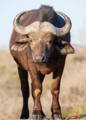
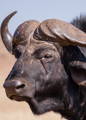
To observe buffalo in this way is to recognise that strength does not always present itself through the individual. It can exist within repetition, within proximity, within the quiet alignment of many forms moving as one. The herd holds its ground not through display, but through continuity, where each animal contributes to a presence that is greater than itself.
Within our own understanding of the natural world, this sense of collective structure carries a quiet significance. Form is not always singular, and meaning is often found within the relationship between elements rather than within any one alone. The buffalo, in its repeated shapes and shared movement, reflects a way of seeing that values both the individual and the whole, allowing each to inform the other without separation.
Did you know?
01
Cape buffalo live in herds that can range from a few individuals to several hundred.
02
Their horns form a solid “boss” across the forehead, providing protection during conflict.
03
Buffalo rely heavily on group awareness, reacting quickly to changes within the herd.
04
Calves are typically kept at the centre of the group for protection.
05
Buffalo often follow established paths to water sources, creating visible tracks across the landscape.
For our family, the buffalo represents an understanding of the natural world that is shaped through connection and awareness, where the relationship between individuals forms something enduring and complete. It reflects a way of observing that looks beyond the singular, recognising the quiet strength that exists within structure, continuity and shared presence, and carrying that understanding forward into how we see, create, and remain connected to Africa.
Read more