Where memory moves across the land
Wildlife | February 2026
Before they are seen, there is often a sound — a low, almost imperceptible rumble carried through the ground, or the quiet fracture of branches giving way under steady pressure. Dust lifts slowly between trees, hanging in the still air, and the landscape begins to shift in a way that suggests movement not of urgency, but of continuity. It is within this gradual unfolding that elephants emerge, not as an interruption to the environment, but as something that has always been part of it.
Their scale is immediately apparent, yet it is not expressed through dominance. Instead, it is carried with a grounded stillness, a weight that feels settled rather than imposed. Each step is deliberate, placed with a quiet certainty that belies their size, allowing them to move through dense bush or open ground with a rhythm that feels both measured and unforced. There is no excess in their movement, only an economy shaped by experience and an understanding of the land they traverse.
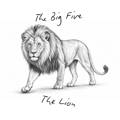
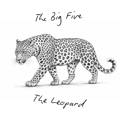
Unlike the solitary rhythm of the leopard, the lion exists within a collective structure that shapes both its behaviour and its identity. The pride moves as a unit, yet each member holds a distinct role within it. Lionesses, more numerous and closely bonded, form the core, their movements aligned through familiarity and shared purpose. It is they who hunt, working with a quiet coordination that relies on positioning, patience and an acute awareness of one another. Their approach is measured, often prolonged, the final moment of action emerging only when the balance of distance and opportunity has settled into place.
Males, by contrast, carry a different kind of responsibility, their presence defined less by movement and more by position. They hold territory, guarding the space that the pride inhabits, their physical form — the mane, the weight, the stillness — reinforcing a sense of boundary that is rarely tested directly. There is an economy to their behaviour, a restraint that reflects not inactivity, but control.
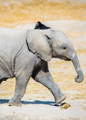
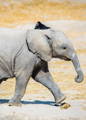
Within the herd, this movement is guided by a structure that is both clear and enduring. At its centre is the matriarch, whose presence is defined not through assertion, but through knowledge accumulated over time. She leads not by force, but by memory — of water sources, of migration routes, of seasons that return and recede with subtle variation. Around her, the herd moves in quiet cohesion, calves kept close, younger members learning through proximity rather than instruction, each interaction reinforcing a continuity that extends beyond the present moment.
Communication within this structure unfolds in ways that are often unseen. A touch of the trunk, a shift in position, or a low-frequency vibration carried through the ground allows the herd to remain connected across distance and terrain. These exchanges are not constant, yet they form an underlying rhythm that holds the group together, ensuring that movement remains aligned even when visibility is limited. In this, the herd operates as a single, fluid presence, shaped by relationships that are both immediate and long established.
Their relationship with the environment is equally integrated. Elephants move between water and dry ground, responding to seasonal change with a familiarity that reflects generations of accumulated knowledge. Riverbeds become pathways, trees both a source of nourishment and a point of interaction, branches broken and stripped not with aggression, but as part of a continuous exchange between animal and landscape. In feeding, they reshape their surroundings, opening pathways, dispersing seeds, and contributing to the balance of the ecosystem in ways that extend far beyond their immediate needs.

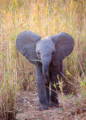
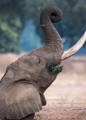
There is a patience to this way of moving, an understanding that the land is not something to be crossed, but something to exist within. Long distances are travelled not with urgency, but with consistency, each step part of a larger rhythm that unfolds over time. In periods of drought, this memory becomes critical, guiding the herd towards water that may lie far beyond immediate reach, ensuring survival through knowledge rather than chance.
To observe elephants closely is to recognise that their presence is shaped as much by what they remember as by what they encounter. There is a continuity to their behaviour that reflects an awareness carried across generations, where experience is not lost, but retained and shared. This sense of memory gives their movement a depth that extends beyond the visible, allowing them to navigate both space and time with a quiet assurance.
Within our own understanding of the natural world, this relationship between observation and continuity holds particular significance. The elephant does not reveal itself all at once, but through time, through repeated encounters, and through a gradual understanding of how it moves, interacts, and exists within its environment. It is this process of seeing, returning, and refining that informs the way we approach our own work, where form is shaped not through assumption, but through attention and respect for the subject.
In this way, the elephant offers more than a moment of observation. It reflects a way of engaging with the world that values patience, memory and connection, allowing understanding to deepen gradually rather than being immediately defined.
Did you know?
01
Elephants can communicate using low-frequency sounds that travel through the ground over several kilometres.
02
Matriarchs can remember the location of water sources over vast distances, even after many years.
03
Elephants play a key role in shaping ecosystems by dispersing seeds and creating pathways through dense vegetation.
04
A calf may remain closely dependent on its mother for several years, learning behaviour through observation and proximity.
05
Elephants are capable of recognising and remembering individual humans and other animals over long periods.
For our family, the elephant represents a connection to the natural world that is grounded in continuity and respect, where understanding is built over time and carried forward through generations. It reflects a way of seeing that values patience and presence, allowing each encounter to contribute to a deeper awareness of both the animal and the landscape it inhabits, and shaping a perspective that continues to inform how we create, not as an isolated act, but as part of a broader and enduring relationship with Africa itself.
Read more