Where presence shapes the open ground
Wildlife | March 2026
There are stretches of open land where very little appears to move, where heat settles into the earth and the horizon holds steady, yet within that stillness there is a weight that suggests something more. It is not always immediately visible, but felt first — a quiet density within the landscape that signals the presence of lions long before they are seen.
When they do emerge into view, it is often without drama. A pride rests in the shade of a low tree or lies partially concealed within tall grass, bodies arranged in loose formation, each animal positioned with an ease that feels both unstructured and entirely deliberate. There is no urgency to their movement, no need to assert themselves within the space they occupy. Their presence alone defines it.
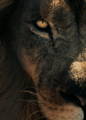
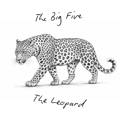
Unlike the solitary rhythm of the leopard, the lion exists within a collective structure that shapes both its behaviour and its identity. The pride moves as a unit, yet each member holds a distinct role within it. Lionesses, more numerous and closely bonded, form the core, their movements aligned through familiarity and shared purpose. It is they who hunt, working with a quiet coordination that relies on positioning, patience and an acute awareness of one another. Their approach is measured, often prolonged, the final moment of action emerging only when the balance of distance and opportunity has settled into place.
Males, by contrast, carry a different kind of responsibility, their presence defined less by movement and more by position. They hold territory, guarding the space that the pride inhabits, their physical form — the mane, the weight, the stillness — reinforcing a sense of boundary that is rarely tested directly. There is an economy to their behaviour, a restraint that reflects not inactivity, but control.
This balance between action and stillness is central to the lion’s nature. For much of the day, the pride remains at rest, conserving energy beneath the heat of the sun. It is within these periods of apparent inactivity that the structure of the group becomes most visible, the subtle interactions between individuals revealing a continuity that extends beyond any single moment. A shift in position, a brief exchange, the quiet presence of cubs moving between adults — these details form a language that is not immediately obvious, yet deeply established.
As the light begins to soften, movement returns gradually. The air cools, shadows lengthen, and the pride begins to reassemble itself with quiet intention. It is often at this time that the voice of the lion carries across the landscape. The roar, low and resonant, travels over distance with a clarity that extends far beyond the animal itself, marking territory, communicating presence, and reinforcing the structure that defines the pride. It is not constant, nor excessive, but used with purpose, its impact shaped as much by restraint as by volume.

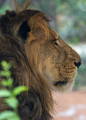
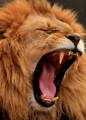
In the act of hunting, the same principles apply. There is no excess in movement, no unnecessary display. The lionesses move through the grass with precision, using the landscape as both cover and guide, their approach unfolding in stages that reflect both instinct and learned behaviour. When the moment arrives, it does so with a sudden clarity, the energy of the pride concentrated into a brief and decisive action before returning once more to stillness.
There is a complexity to the lion that extends beyond its physical form. It is not defined solely by strength, but by the structure within which that strength exists. The pride holds a continuity that moves through time, shaped by relationships, by hierarchy, and by the gradual passage of generations. Within this, the lion becomes less an individual presence and more a reflection of something collective, where identity is shared rather than singular.
To observe lions in this way is to understand that presence is not always expressed through movement. It can be held in stillness, in position, in the quiet assurance that comes from belonging to a structure that is both stable and enduring. The landscape responds to this presence, not through change, but through a subtle shift in how it is experienced, where space feels defined not by boundaries, but by what inhabits it.
Within our own understanding of the natural world, this sense of structure and balance carries through in quieter ways. Observation becomes less about capturing a moment, and more about recognising the relationships that exist within it, allowing form to be understood through context rather than isolation. The lion, in its collective presence, offers a reminder that strength is not only held within the individual, but within the connections that define it.
Did you know?
01
Lions are the only truly social big cats, living in structured groups known as prides.
02
A lion’s roar can be heard up to eight kilometres away under the right conditions.
03
Lionesses are responsible for the majority of hunting, often working together in coordinated strategies.
04
Male lions use scent marking and vocalisation to define and defend their territory.
05
Cubs are raised communally within the pride, often suckling from multiple females.
For our family, the lion represents an understanding of the natural world that extends beyond the individual, reflecting the importance of connection, structure and continuity. It speaks to a way of observing that values not only what is seen, but how it exists within a wider whole, where presence is shaped through balance and shared purpose, and where what endures is not simply strength, but the relationships that sustain it over time.
Read more